

June 12, 2026

Student Housing Marketing Is Won Before Pre-Leasing Opens

Modern student housing bedroom with bright natural light, study area, and move-in ready interior

Student housing pre-leasing is a fixed annual deadline. Why the visual package has to launch before the building, mapped to the leasing calendar month by month

Student housing turns pre-leasing into a fixed annual deadline. The next resident cohort arrives in August whether the building is finished, the model unit is open, or the photography is ready.

That means a new purpose-built student housing community can spend most of its first lease-up selling a product prospects cannot enter. By the time construction photos look marketable, the strongest operators may already have committed most of their beds. In April 2026, the Yardi 200 was already 71.6% preleased for the 2026-2027 academic year, according to Yardi Matrix.

Student housing marketing cannot wait for the physical asset. The visual asset has to launch first.
There is no honest national rule that every flagship market opens on one date and every smaller market opens on another. The spread is wide. In January 2026, Virginia Tech was already 88.2% preleased, while 39 of the Yardi 200 markets were below 30%, according to Yardi's February 2026 report. Local enrollment, distance to campus, new supply, renewal strategy, and market custom all change the timing.

But the national cycle is clear. RealPage treats October as the opening of the fall pre-lease season, while Yardi measures leasing-season rent performance from October forward. The calendar below combines RealPage's national and core-university data with Yardi's 200-school index. Those samples are not interchangeable, so the percentages should be used as directional checkpoints, not as one continuous index.

Month What the market is doing Current benchmark What the team needs ready
June-AugPlanning, positioning, creative production, website build, unit matrix cleanupYardi projected 28,167 new beds for 2026-2027 in its March 2026 reportApproved visual brief, exterior and amenity renderings, site map, floor-plan system
SepRenewal strategy and early-access campaigns begin in faster marketsNo reliable national September benchmark is published for the new cycleWebsite populated, lead capture tested, leasing team trained on every asset
OctThe national pre-leasing season opensRealPage measured 3.3% of privately owned beds preleased for fall 2026, the slowest October since 2015Full launch package live; no "coming soon" gaps for core unit types or amenities
NovEarly velocity begins separating properties and marketsRealPage's core 175 universities reached 18.4% by NovemberPaid and organic creative refreshed; tour and floor-plan engagement reviewed
DecHoliday decisions happen remotely; urgency starts building27.1% nationally and 28.9% across RealPage's core 175 universities preleasedParent-facing proof, pricing clarity, remote leasing tools, retargeting creative
JanThe cycle accelerates after students returnYardi revised January preleasing to 49.7% in its March 2026 reportUnit-level comparisons and availability must be unmistakable
FebHalf the market is already spoken for in the national indexYardi reported 58.6% preleased in its March 2026 reportShift spend toward remaining floor plans and objections
MarMany high-demand markets are deep into scarcity messagingYardi's final March estimate was 69.6%, cited in its May 2026 reportDo not market sold-out experiences; direct every asset toward available inventory
AprSpring visits matter, but the cycle is already matureThe Yardi 200 reached 71.6% in the May 2026 reportRendered tours support prospects who cannot make a physical visit
May-JunOperators work the remaining inventory and protect rateIn the prior cycle, Yardi recorded 79.9% in May and 85.3% in JuneCreative becomes floor-plan, incentive, and availability-specific
Jul-AugFinal push, turn, move-in, and delivery risk convergeThe prior cycle reached 89.9% in July and 93.7% in AugustFinal-bed campaigns, move-in communication, then a rapid photography refresh

The implication is straightforward. Summer is not the quiet period before student housing pre-leasing. Summer is production season. If the property wants to launch in October, the visual package cannot enter procurement in October. Exterior design, interiors, FF&E, unit matrices, and website requirements need to be organized early enough for assets to be produced, reviewed, corrected, and deployed before prospects begin comparing options.

A Construction Site Still Has to Lease

The August deadline is unusually rigid. Project-management firm PMA advises student housing teams to plan backward from August because a missed delivery can displace hundreds of students and trigger hotel costs, financial losses, and reputational damage. Its 2025 construction-risk analysis identifies permitting, utilities, site conditions, long-lead equipment, furniture installation, and elevator logistics as schedule threats. Marketing faces the same immovable date from the other direction. A property scheduled to deliver in August 2027 will be leasing in fall 2026. During the most important months of that first cycle, the site may offer little more than fencing, concrete, and a leasing trailer. Waiting for photography is not conservative. It is a decision to enter the market without a complete product story. That does not mean renderings should disguise construction risk. Accuracy matters more when the building is unavailable. The visual program should clearly distinguish representative imagery from completed photography, remain tied to approved plans and specifications, and update when design changes materially affect the resident experience.

The Math of Missing a Student Housing Lease-Up

Conventional multifamily can recover a vacant unit next month. Student housing demand is concentrated around the academic calendar. A bed that remains empty after fall move-in may stay economically impaired for the lease year because the largest prospect pool has already committed elsewhere.

The math of a missed lease-up

What 10% unleased looks like on a 600-bed community

Empty beds at 10% unleased60 beds
Average advertised rent per bed (Yardi, April 2026)$931 / mo
Lease term12 months
Gross scheduled rent at risk$670,320

A scale illustration, not net operating income. It excludes concessions, bad debt, turn costs, utilities, parking, ancillary income, and a property's actual rent mix

The 12-month assumption reflects the standard lease structure described in StarRez's 2026 off-campus housing research, in which 48% of surveyed students said they would prefer an option other than the standard 12-month lease. See the StarRez Off-Campus Housing Report release. It also clarifies the budget conversation. A coordinated visualization package does not need to fill all 60 beds by itself to justify its cost. It needs to help the website, leasing team, paid media, ILS listings, and outreach campaigns communicate the product early enough to compete. The expensive mistake is not paying for visualization. It is discovering in February that the property entered October without the information prospects needed.

The Decision Is Happening on More Than One Screen

Student housing has at least three audiences: the resident, the financial participant, and the remote prospect.

The student

97%

The search has to work on a phone

Of U.S. adults 18 to 29 own a smartphone. Floor-plan labels must stay legible and tours easy to find on a small screen

The parent

96%

They are evaluating risk, not pillows

Rated safety extremely or moderately important. Visuals should make entrances, security, privacy, and distance clear

The remote prospect

29%

The tour can be the property

Of recent renters call interactive 3D tours of common areas essential. For some, a site visit is not an option

Pew Research Center reports that 97% of U.S. adults ages 18 to 29 own a smartphone in its Mobile Fact Sheet. Floor-plan labels must remain legible on a small screen. Rendered tours need obvious navigation. The first exterior and first unit image have to communicate value without a pinch-and-zoom investigation. Heavy files and buried tour links turn expensive visualization into invisible visualization.

Students may lead the search, but parents and guarantors often interrogate the decision: Is the bedroom private? How is the building secured? What is included? How far is the walk? Does the unit shown match the lease being signed? StarRez's May 2026 survey of more than 550 North American students found that 96% rated safety as extremely or moderately important, 63% preferred security features such as cameras or gated entry, and 98% rated responsive management as very or somewhat important. The lesson for visualization is not to render more decorative pillows. It is to communicate entrances, circulation, shared spaces, bedroom privacy, and property operations with enough clarity to reduce perceived risk. The U.S. hosted 1,177,766 international students in the 2024-2025 academic year, according to the 2025 Open Doors release. For a student comparing properties before arriving in the country, an in-person tour may not be available at all. Zillow's nationally representative 2025 research found that 29% of recent renters considered interactive 3D tours of common areas essential, while 57% considered at least one of the digital media features tested essential. See Zillow's Consumer Housing Trends Report for renters. The virtual experience is not a bonus gallery. For some prospects, it is the property.

The Visualization Playbook by Phase

The strongest student housing marketing packages do not launch every asset at once and leave them untouched for a year. They map the asset to the decision being made.

The visualization playbook by phase

01

Before pre-leasing: make the property comprehensible

  • Exterior renderings for architecture and street presence
  • Amenity renderings that support the rate
  • A rendered site map for proximity and the route to campus
  • Floor plans that make the unit mix shoppable

02

During pre-leasing: answer unit-level objections

  • Rendered tours of bedrooms, baths, and shared living
  • Unit-specific imagery instead of one repeated hero
  • Virtual staging for empty or completed units
  • Versioned stills and motion for social, paid, and email

03

At delivery: replace promise with proof

  • Photography takes over where it shows the finished product better
  • Renderings still cover unphotographed unit types
  • Seasonal scenes and hard-to-reach camera positions
  • The package becomes a visual library, not placeholders

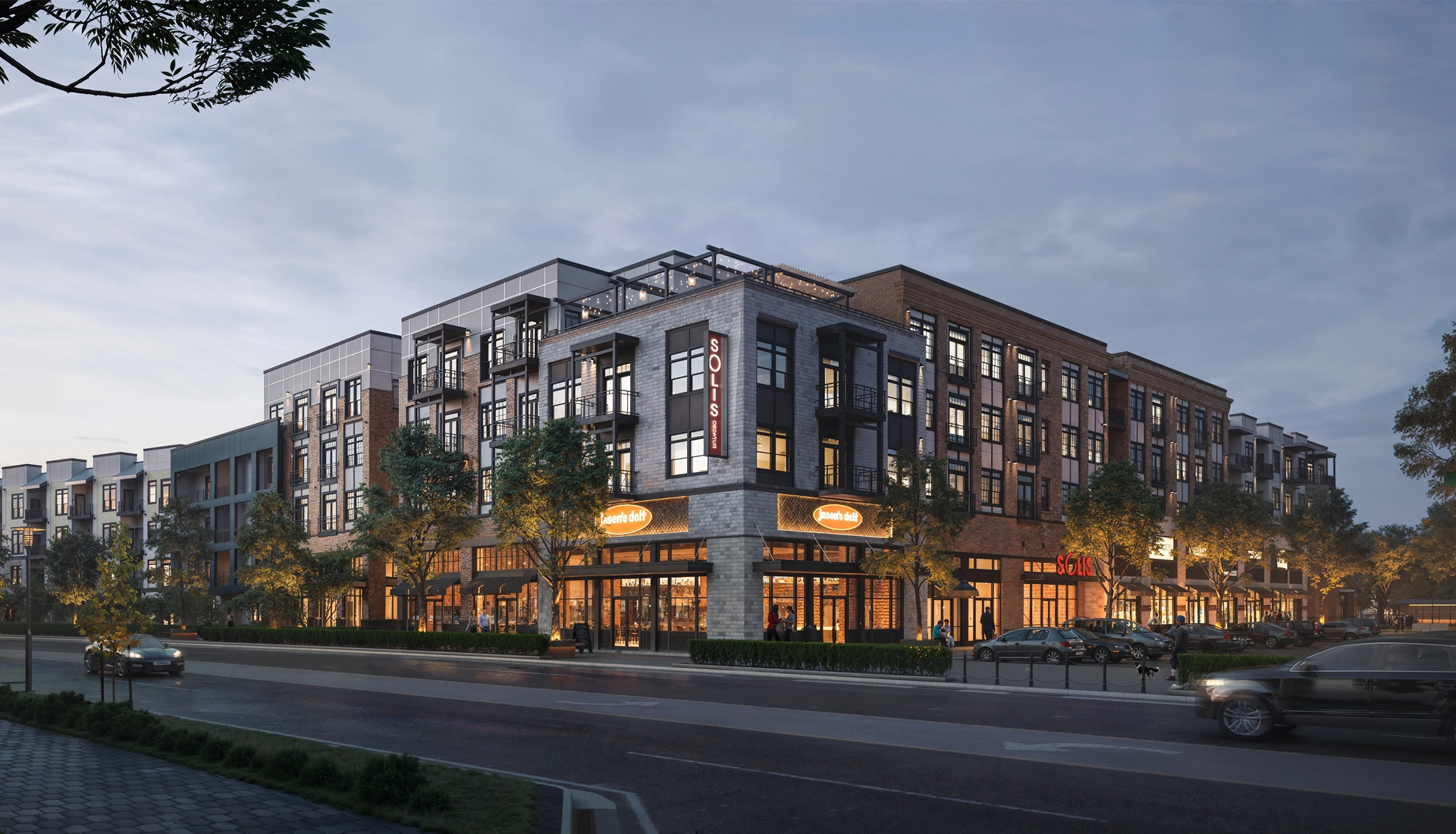
These assets should be approved before the website and campaign system are finalized, not dropped in after launch. The View Pro's student housing visualization service combines these formats for the annual leasing cycle. Multi-Housing News documented the operational pattern as dated but useful context in 2021: Caliber Living used virtual leasing, while technology providers advised operators to make tours easy to find and include transitional spaces as well as rooms. The article also warned that burying a tour on a gallery page reduces its usefulness. See How to Virtually Showcase Student Housing Properties. Once the property is complete, photography should take over wherever it represents the finished product better. Do not discard the renderings. They still cover unit types that were not photographed, seasonal exterior scenes, future phases, and camera positions that are difficult to reproduce. The launch package becomes a visual library rather than a set of temporary placeholders.

Where Student Housing Marketing Teams Lose the Cycle

They wait for construction to become photogenic

By the time the site looks ready for a campaign, the market may already be halfway leased. In the current cycle, Yardi's revised index reached 49.7% in January. Construction progress and leasing progress are operating on different clocks.

They sell the building but not the bed

A dramatic exterior cannot answer whether a prospect's desk fits, whether two bedrooms share a bathroom, or what is private inside a four-bed unit. Student housing is leased by bed and selected by floor plan. Unit-level visualization is not supporting content. It is product information.

They make parents reconstruct the facts

Parents should not have to cross-reference a site map, a generic gallery, and a PDF to understand access, security, distance, and the unit being guaranteed. The package should resolve those questions directly.

They refresh after the market has moved

A campaign can be technically current and commercially late. By spring, marketing should be focused on the unit types and objections that remain, not still waiting for the original tour or revised floor plans

Pre-Leasing Season Is Won in the Summer

The 2026-2027 cycle is competitive. Yardi expects 28,167 new beds, current rent growth is modest, and its May 2026 report identifies large pipelines as a drag on leasing in markets including NC State, Tennessee, Central Florida, Arizona State, and Purdue. At the same time, enrollment across 184 of the Yardi 200 universities grew 1.8% year over year to 4.9 million students, according to Yardi's February 2026 report. Demand is there. So is choice.The properties that enter fall with a complete, accurate, unit-level visual system can start selling while construction continues. The properties that wait for the building to explain itself give away the first months of the only lease-up window that matters.

June 12, 2026

Student Housing Marketing Is Won Before Pre-Leasing Opens

Student housing pre-leasing is a fixed annual deadline. Why the visual package has to launch before the building, mapped to the leasing calendar month by month

Modern student housing bedroom with bright natural light, study area, and move-in ready interior

Student housing turns pre-leasing into a fixed annual deadline. The next resident cohort arrives in August whether the building is finished, the model unit is open, or the photography is ready.

That means a new purpose-built student housing community can spend most of its first lease-up selling a product prospects cannot enter. By the time construction photos look marketable, the strongest operators may already have committed most of their beds. In April 2026, the Yardi 200 was already 71.6% preleased for the 2026-2027 academic year, according to Yardi Matrix.

Student housing marketing cannot wait for the physical asset. The visual asset has to launch first.
There is no honest national rule that every flagship market opens on one date and every smaller market opens on another. The spread is wide. In January 2026, Virginia Tech was already 88.2% preleased, while 39 of the Yardi 200 markets were below 30%, according to Yardi's February 2026 report. Local enrollment, distance to campus, new supply, renewal strategy, and market custom all change the timing.

But the national cycle is clear. RealPage treats October as the opening of the fall pre-lease season, while Yardi measures leasing-season rent performance from October forward. The calendar below combines RealPage's national and core-university data with Yardi's 200-school index. Those samples are not interchangeable, so the percentages should be used as directional checkpoints, not as one continuous index.

Month What the market is doing Current benchmark What the team needs ready
June-AugPlanning, positioning, creative production, website build, unit matrix cleanupYardi projected 28,167 new beds for 2026-2027 in its March 2026 reportApproved visual brief, exterior and amenity renderings, site map, floor-plan system
SepRenewal strategy and early-access campaigns begin in faster marketsNo reliable national September benchmark is published for the new cycleWebsite populated, lead capture tested, leasing team trained on every asset
OctThe national pre-leasing season opensRealPage measured 3.3% of privately owned beds preleased for fall 2026, the slowest October since 2015Full launch package live; no "coming soon" gaps for core unit types or amenities
NovEarly velocity begins separating properties and marketsRealPage's core 175 universities reached 18.4% by NovemberPaid and organic creative refreshed; tour and floor-plan engagement reviewed
DecHoliday decisions happen remotely; urgency starts building27.1% nationally and 28.9% across RealPage's core 175 universities preleasedParent-facing proof, pricing clarity, remote leasing tools, retargeting creative
JanThe cycle accelerates after students returnYardi revised January preleasing to 49.7% in its March 2026 reportUnit-level comparisons and availability must be unmistakable
FebHalf the market is already spoken for in the national indexYardi reported 58.6% preleased in its March 2026 reportShift spend toward remaining floor plans and objections
MarMany high-demand markets are deep into scarcity messagingYardi's final March estimate was 69.6%, cited in its May 2026 reportDo not market sold-out experiences; direct every asset toward available inventory
AprSpring visits matter, but the cycle is already matureThe Yardi 200 reached 71.6% in the May 2026 reportRendered tours support prospects who cannot make a physical visit
May-JunOperators work the remaining inventory and protect rateIn the prior cycle, Yardi recorded 79.9% in May and 85.3% in JuneCreative becomes floor-plan, incentive, and availability-specific
Jul-AugFinal push, turn, move-in, and delivery risk convergeThe prior cycle reached 89.9% in July and 93.7% in AugustFinal-bed campaigns, move-in communication, then a rapid photography refresh

The implication is straightforward. Summer is not the quiet period before student housing pre-leasing. Summer is production season. If the property wants to launch in October, the visual package cannot enter procurement in October. Exterior design, interiors, FF&E, unit matrices, and website requirements need to be organized early enough for assets to be produced, reviewed, corrected, and deployed before prospects begin comparing options.

A Construction Site Still Has to Lease

The August deadline is unusually rigid. Project-management firm PMA advises student housing teams to plan backward from August because a missed delivery can displace hundreds of students and trigger hotel costs, financial losses, and reputational damage. Its 2025 construction-risk analysis identifies permitting, utilities, site conditions, long-lead equipment, furniture installation, and elevator logistics as schedule threats. Marketing faces the same immovable date from the other direction. A property scheduled to deliver in August 2027 will be leasing in fall 2026. During the most important months of that first cycle, the site may offer little more than fencing, concrete, and a leasing trailer. Waiting for photography is not conservative. It is a decision to enter the market without a complete product story. That does not mean renderings should disguise construction risk. Accuracy matters more when the building is unavailable. The visual program should clearly distinguish representative imagery from completed photography, remain tied to approved plans and specifications, and update when design changes materially affect the resident experience.

The Math of Missing a Student Housing Lease-Up

Conventional multifamily can recover a vacant unit next month. Student housing demand is concentrated around the academic calendar. A bed that remains empty after fall move-in may stay economically impaired for the lease year because the largest prospect pool has already committed elsewhere.

The math of a missed lease-up

What 10% unleased looks like on a 600-bed community

Empty beds at 10% unleased60 beds
Average advertised rent per bed (Yardi, April 2026)$931 / mo
Lease term12 months
Gross scheduled rent at risk$670,320

A scale illustration, not net operating income. It excludes concessions, bad debt, turn costs, utilities, parking, ancillary income, and a property's actual rent mix

The 12-month assumption reflects the standard lease structure described in StarRez's 2026 off-campus housing research, in which 48% of surveyed students said they would prefer an option other than the standard 12-month lease. See the StarRez Off-Campus Housing Report release. It also clarifies the budget conversation. A coordinated visualization package does not need to fill all 60 beds by itself to justify its cost. It needs to help the website, leasing team, paid media, ILS listings, and outreach campaigns communicate the product early enough to compete. The expensive mistake is not paying for visualization. It is discovering in February that the property entered October without the information prospects needed.

The Decision Is Happening on More Than One Screen

Student housing has at least three audiences: the resident, the financial participant, and the remote prospect.

The student

97%

The search has to work on a phone

Of U.S. adults 18 to 29 own a smartphone. Floor-plan labels must stay legible and tours easy to find on a small screen

The parent

96%

They are evaluating risk, not pillows

Rated safety extremely or moderately important. Visuals should make entrances, security, privacy, and distance clear

The remote prospect

29%

The tour can be the property

Of recent renters call interactive 3D tours of common areas essential. For some, a site visit is not an option

Pew Research Center reports that 97% of U.S. adults ages 18 to 29 own a smartphone in its Mobile Fact Sheet. Floor-plan labels must remain legible on a small screen. Rendered tours need obvious navigation. The first exterior and first unit image have to communicate value without a pinch-and-zoom investigation. Heavy files and buried tour links turn expensive visualization into invisible visualization.

Students may lead the search, but parents and guarantors often interrogate the decision: Is the bedroom private? How is the building secured? What is included? How far is the walk? Does the unit shown match the lease being signed? StarRez's May 2026 survey of more than 550 North American students found that 96% rated safety as extremely or moderately important, 63% preferred security features such as cameras or gated entry, and 98% rated responsive management as very or somewhat important. The lesson for visualization is not to render more decorative pillows. It is to communicate entrances, circulation, shared spaces, bedroom privacy, and property operations with enough clarity to reduce perceived risk. The U.S. hosted 1,177,766 international students in the 2024-2025 academic year, according to the 2025 Open Doors release. For a student comparing properties before arriving in the country, an in-person tour may not be available at all. Zillow's nationally representative 2025 research found that 29% of recent renters considered interactive 3D tours of common areas essential, while 57% considered at least one of the digital media features tested essential. See Zillow's Consumer Housing Trends Report for renters. The virtual experience is not a bonus gallery. For some prospects, it is the property.

The Visualization Playbook by Phase

The strongest student housing marketing packages do not launch every asset at once and leave them untouched for a year. They map the asset to the decision being made.

The visualization playbook by phase

01

Before pre-leasing: make the property comprehensible

  • Exterior renderings for architecture and street presence
  • Amenity renderings that support the rate
  • A rendered site map for proximity and the route to campus
  • Floor plans that make the unit mix shoppable

02

During pre-leasing: answer unit-level objections

  • Rendered tours of bedrooms, baths, and shared living
  • Unit-specific imagery instead of one repeated hero
  • Virtual staging for empty or completed units
  • Versioned stills and motion for social, paid, and email

03

At delivery: replace promise with proof

  • Photography takes over where it shows the finished product better
  • Renderings still cover unphotographed unit types
  • Seasonal scenes and hard-to-reach camera positions
  • The package becomes a visual library, not placeholders

These assets should be approved before the website and campaign system are finalized, not dropped in after launch. The View Pro's student housing visualization service combines these formats for the annual leasing cycle. Multi-Housing News documented the operational pattern as dated but useful context in 2021: Caliber Living used virtual leasing, while technology providers advised operators to make tours easy to find and include transitional spaces as well as rooms. The article also warned that burying a tour on a gallery page reduces its usefulness. See How to Virtually Showcase Student Housing Properties. Once the property is complete, photography should take over wherever it represents the finished product better. Do not discard the renderings. They still cover unit types that were not photographed, seasonal exterior scenes, future phases, and camera positions that are difficult to reproduce. The launch package becomes a visual library rather than a set of temporary placeholders.

Where Student Housing Marketing Teams Lose the Cycle

They wait for construction to become photogenic

By the time the site looks ready for a campaign, the market may already be halfway leased. In the current cycle, Yardi's revised index reached 49.7% in January. Construction progress and leasing progress are operating on different clocks.

They sell the building but not the bed

A dramatic exterior cannot answer whether a prospect's desk fits, whether two bedrooms share a bathroom, or what is private inside a four-bed unit. Student housing is leased by bed and selected by floor plan. Unit-level visualization is not supporting content. It is product information.

They make parents reconstruct the facts

Parents should not have to cross-reference a site map, a generic gallery, and a PDF to understand access, security, distance, and the unit being guaranteed. The package should resolve those questions directly.

They refresh after the market has moved

A campaign can be technically current and commercially late. By spring, marketing should be focused on the unit types and objections that remain, not still waiting for the original tour or revised floor plans

Pre-Leasing Season Is Won in the Summer

The 2026-2027 cycle is competitive. Yardi expects 28,167 new beds, current rent growth is modest, and its May 2026 report identifies large pipelines as a drag on leasing in markets including NC State, Tennessee, Central Florida, Arizona State, and Purdue. At the same time, enrollment across 184 of the Yardi 200 universities grew 1.8% year over year to 4.9 million students, according to Yardi's February 2026 report. Demand is there. So is choice.The properties that enter fall with a complete, accurate, unit-level visual system can start selling while construction continues. The properties that wait for the building to explain itself give away the first months of the only lease-up window that matters.

Let’s Bring Your Vision to Life

Thank you! Your submission has been received!
Oops! Something went wrong while submitting the form.